Recovering a Lost Master: How Dr. M. Akua McDaniel Restored Edwin Augustus Harleston to the Canon of American Art
Examining the Intersecting Spheres of African American Artistic Modernism, Preservation, and Cultural Memory in the Jim
Press Release Disclaimer: This is a press release distributed through the XPR Media network. It has not been independently verified by our newsroom.

Examining the Intersecting Spheres of African American Artistic Modernism, Preservation, and Cultural Memory in the Jim Crow South
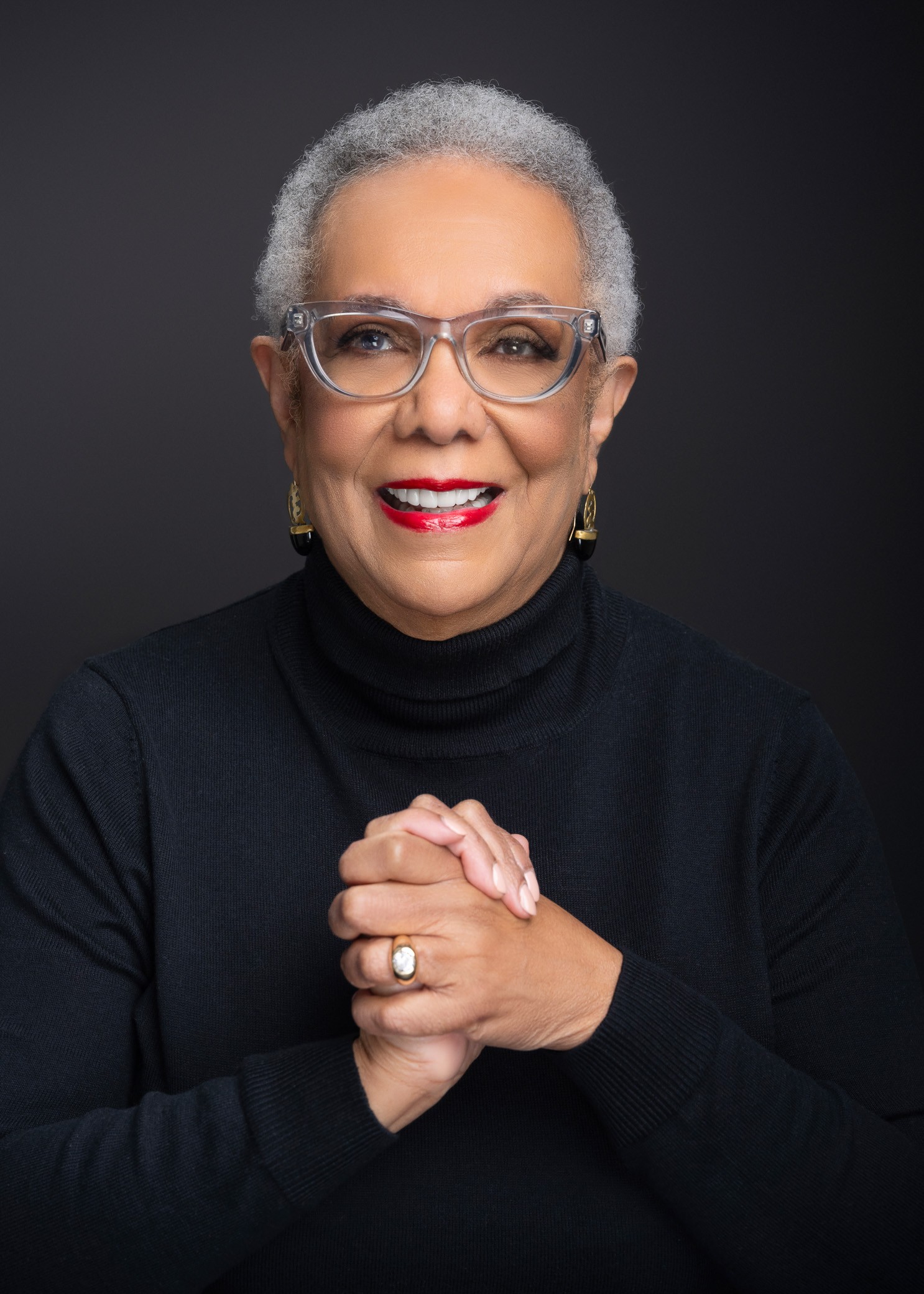
ATLANTA, GA, UNITED STATES, November 15, 2026 /EINPresswire.com/ — In the historical study of American art, the recovery of omitted creators requires meticulous primary-source investigation, rigorous archival reconstruction, and a deep contextual understanding of institutional barriers. Dr. M. Akua McDaniel, prominent art historian, curator, and retired Associate Professor at Spelman College, has dedicated decades of scholarly research to re-evaluating African American visual culture, focusing specifically on early 20th-century portraiture and fine art patronage. Her landmark work, A Dream Deferred: The Life and Art of Edwin Augustus Harleston, stands as the definitive biographical and critical analysis of Edwin Augustus Harleston (1882–1931), illuminating this central yet long-overlooked figure in early 20th century American art.
The Dual Imperative of Edwin Augustus Harleston
Born in Charleston, South Carolina, during the Reconstruction era, Edwin Augustus Harleston navigated a complex social landscape marked by rigid racial segregation and limited institutional access for Black artists. Educated at Atlanta University under the mentorship of W.E.B. Du Bois, Harleston subsequently gained admission to the prestigious School of the Museum of Fine Arts, Boston, completing his formal academic training between 1906 and 1912. Despite his rigorous technical mastery of portraiture, Harleston was forced to balance his artistic vocation with the economic demands of managing his family’s funeral business in Charleston.
Dr. McDaniel’s monograph explores how this dual existence informed Harleston’s practice. Rather than viewing his work at the funeral home as an unwanted distraction from his aesthetic work, Dr. McDaniel demonstrates how his standing within the local Black community provided him direct access to a broad cross-section of subjects—ranging from prominent civic leaders, educators, and clergy to working-class neighbors, families, and tradespeople. His portraits provided a dignified visual counter-narrative to the prevailing caricatures and derogatory media stereotypes of the Jim Crow Era.
“Harleston did not merely paint likenesses; he captured the quiet dignity, intellectual rigor, and resilience of an entire generation navigating systemic exclusion. Recovering his legacy requires looking beyond formal galleries to understand how art functioned within the community.”
— Dr. M. Akua McDaniel, Author and Art Historian
Archival Recovery and Scholarly Methodology
Dr. McDaniel’s research relies on extensive archival excavation, including personal correspondence, business ledgers, family diaries, rare photographs, and exhibition logs spanning several decades. Through meticulous cross-referencing of primary records, her work traces Harleston’s pivotal role in founding the Charleston branch of the NAACP, his activism for equal educational facilities, and his collaborative efforts with fellow contemporary artists, including his wife, photographer Elise Forrest Harleston.
A critical contribution of Dr. McDaniel’s scholarship is her analysis of the partnership between Edwin and Elise Harleston. Elise, who trained at the Tuskegee Institute and the E. Brunel School of Photography in New York, created studio photographs that Edwin frequently utilized as compositional foundations for his oil portraits. Dr. McDaniel’s monograph highlights this groundbreaking interdisciplinary collaboration, ensuring that Elise Forrest Harleston’s foundational contributions to early African American photography are recognized alongside her husband’s painted works.
The publication of Dr. McDaniel’s monograph and her curated exhibitions have catalyzed broader academic re-examinations of Southern regional art history. By demonstrating how Harleston bridged the aesthetic sensibilities of the Harlem Renaissance with the socio-political realities of the American South, her research has expanded the canon of American art history to incorporate creators working outside traditional northern cultural capitals.
Preserving Cultural Heritage in the Modern Academic Canon
During her distinguished tenure as Chair of the Department of Art and Art History at Spelman College, Dr. McDaniel prioritized institutional preservation, curriculum development, and the mentorship of emergent scholars of color. Her ongoing work continues to inform curatorial approaches at national museums, university archives, and private collections seeking to audit and diversify their holdings.
As major museums and cultural institutions increasingly seek to address historical gaps in their permanent collections, Dr. McDaniel’s research on Edwin Augustus Harleston serves as an essential framework for institutional recovery. Her work proves that re-integrating omitted artists requires not merely hanging forgotten paintings on museum walls, but conducting deep, contextual archival work to understand the historical systems that led to their initial exclusion.
About Dr. M. Akua McDaniel
Dr. M. Akua McDaniel is an acclaimed art historian, curator, author, and retired Associate Professor of Art History at Spelman College. Holding advanced degrees in Studio Art, Art History and American Studies, Dr. McDaniel has spent over four decades researching, writing, and lecturing on 19th and 20th-century African American art history, public art, and visual culture. She has published extensively in peer-reviewed journals, contributed to major exhibition catalogs, and served as a consultant for national art organizations and cultural heritage institutions.
Dr. M. Akua McDaniel
Dr. M. Akua McDaniel
hello@akuamcdaniel.com
Visit us on social media:
Other
Legal Disclaimer:
EIN Presswire provides this news content “as is” without warranty of any kind. We do not accept any responsibility or liability
for the accuracy, content, images, videos, licenses, completeness, legality, or reliability of the information contained in this
article. If you have any complaints or copyright issues related to this article, kindly contact the author above.

Media gallery